

 En
En  Español
 中文简体
中文简体
Submit feedback
Industry News

What Distinguishes the Craft of Handwoven Raffia Straw Hats?
 2026.01.23
 Industry News
The creation of handwoven raffia straw hats is a global craft, practiced from Madagascar to South America, that transforms a humble natural fiber into a functional and cultural object. Unlike mass-produced headwear, these hats emerge from a slow, deliberate process where material knowledge and manual skill are paramount. The journey from plant to finished hat involves distinct stages, each demanding specific techniques and decisions that influence the final product's character, durability, and aesthetic. The craft does not rely on superlative claims of perfection, but rather on the tangible qualities of resourcefulness, adaptability, and the visible hand of the maker.
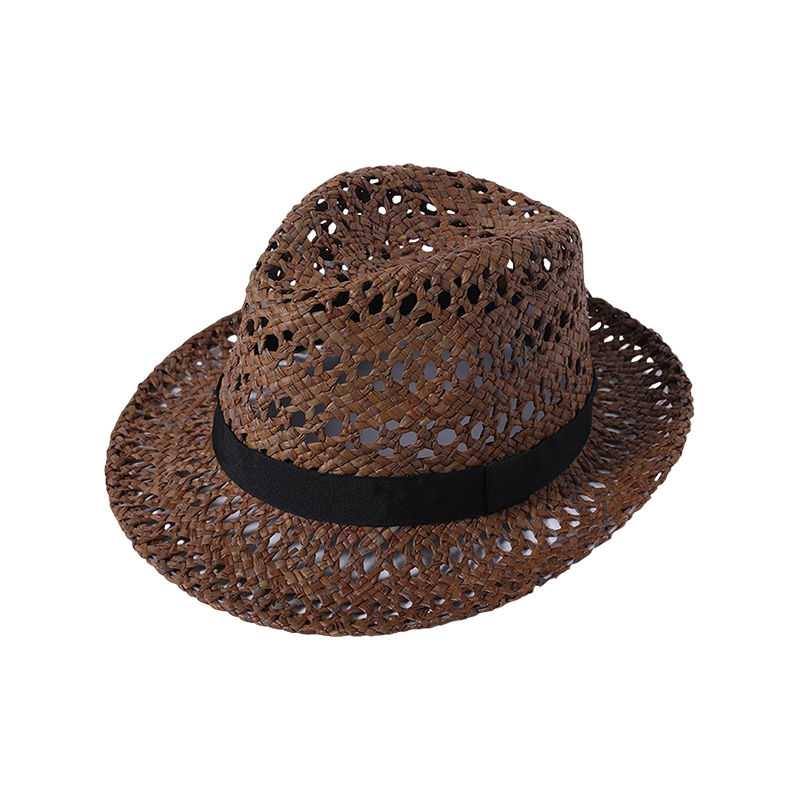
The Foundation: Sourcing and Preparing Raffia
The process begins with the raffia palm, specifically the fibrous material harvested from the undersides of its leaves. This initial stage is crucial, as the treatment of the raw material sets the foundation for all subsequent work.
- Harvesting and Extraction: Harvesters select mature leaves, making careful cuts to ensure the palm's continued health. The long, ribbon-like strands are then stripped from the leaf midrib. At this point, the raffia is green, stiff, and contains natural gums.
- Drying and Conditioning: The strands are dried, often in sunlight, which lightens their color to a pale beige. This drying process is a first step in making the fiber workable. For weaving, the dried raffia must be conditioned to restore pliability. Artisans typically moisten the fibers with water, sometimes by drawing strands across a damp cloth or steaming them. This prevents cracking during the weaving process.
- Sorting and Splitting: The prepared raffia is sorted by length, width, and quality. For fine weaving, artisans may further split the ribbons lengthwise into narrower, more consistent strips using their fingers or a simple tool. This meticulous preparation ensures uniformity in the weaving material, which contributes to the evenness of the final hat's texture.
The Structural Art: Weaving Techniques and Forms
The central act of weaving is where form emerges from linear material. Artisans employ various techniques, often passed through generations, to create different structural patterns and hat shapes.
- Coiling as a Primary Method: A prevalent technique is coiled weaving, where a foundation—often a bundle of raffia strands or a single, thicker core—is spiraled and bound with a wrapping strand. The weaver uses a needle or their fingers to stitch the wrapping fiber through the previous coil, building outward. The density and tension of these stitches determine the hat's firmness. By increasing or decreasing the number of wraps per coil, the weaver can subtly shape the form, flaring it out for a brim or drawing it in for a crown.
- Plaiting and Braiding: Another approach involves first plaiting the raffia into flat or tubular braids. These pre-woven braids are then sewn together in a spiral, similar to coiled construction, but resulting in a different surface texture—often a herringbone or chevron pattern. This method can allow for greater speed and the integration of dyed strands for patterned designs.
- Shaping During Construction: Unlike hats woven flat and later molded, many raffia hats are shaped directly on the weaver's head, a knee, or a simple wooden form. This direct modeling allows for continuous adjustment, ensuring the crown's depth and the brim's width meet the intended proportions as the work progresses.
Refinement: Finishing and Detailing Processes
Once the basic woven form is complete, the hat undergoes finishing processes that enhance its durability, comfort, and visual identity.
- Blocking and Pressing: For hats intended for a specific, standardized shape, they may be dampened and placed on a wooden hat block or mold. Gentle pressure and heat are applied to set the shape, smooth the weave, and create crisp lines between the crown and brim.
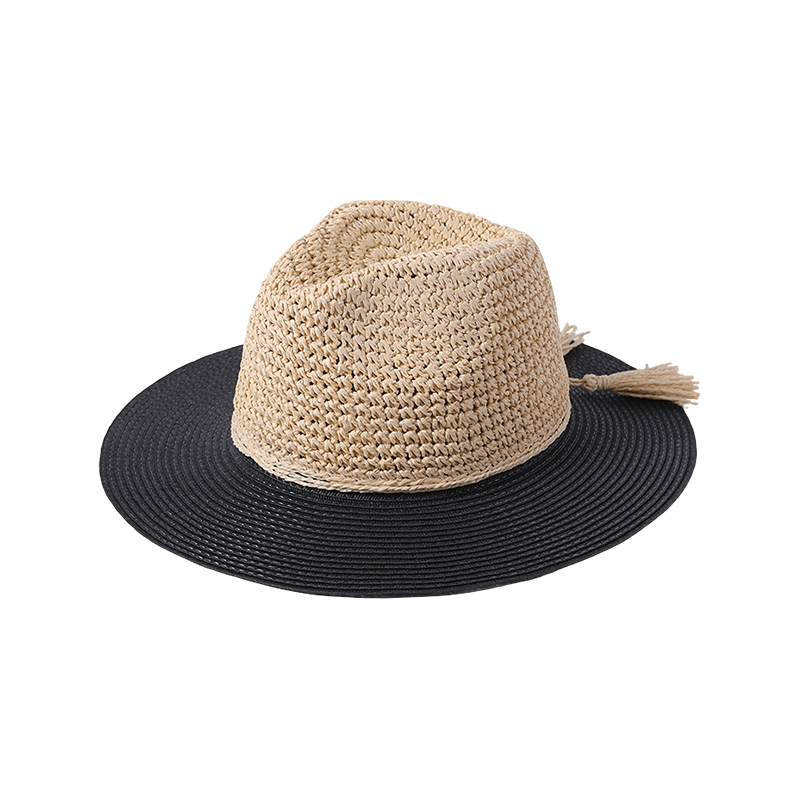
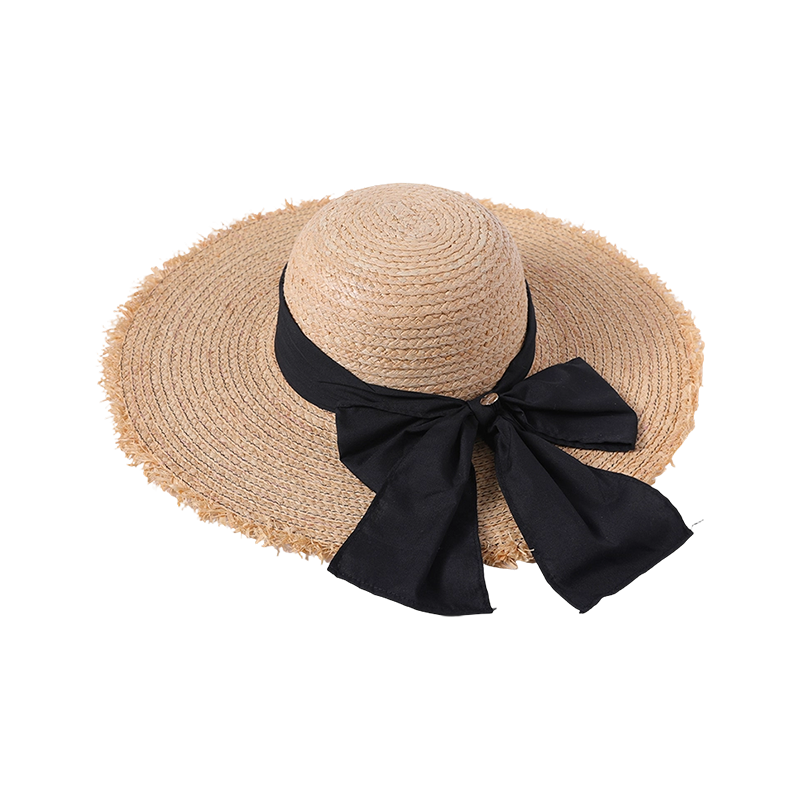
- Edge Binding: The raw edge of the brim is often finished with a binding. This can be a thin, tightly wrapped raffia whipstitch, or a band of complementary material such as leather, silk, or a contrasting color of raffia. This binding protects the vulnerable edge from fraying and provides a clean visual terminus.
- Interior Fitting: A cloth or leather sweatband is frequently hand-stitched to the inside of the crown. This addition improves comfort, absorbs moisture, and helps the hat retain its shape on the wearer's head. The choice of lining material and its application are marks of considered construction.
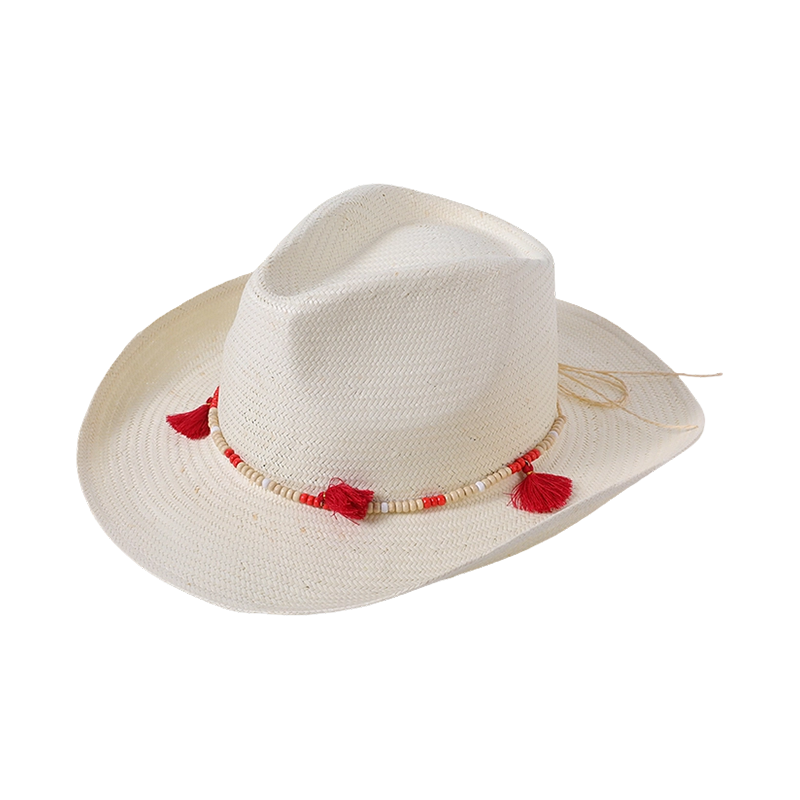
- Embellishment: Decoration, when present, is typically integral to the weave or carefully applied. This may include woven-in geometric patterns using dyed raffia, the addition of a simple band, or the attachment of natural elements like shells or beads. Embellishment tends to underscore, rather than overwhelm, the material's inherent texture.
Context and Character: Practical and Cultural Dimensions
The significance of the handwoven raffia hat extends beyond its physical properties, rooted in practical utility and cultural expression.
- Adaptive Functionality: The raffia hat is, fundamentally, a responsive object. Its woven structure creates thousands of tiny air pockets, providing insulation and ventilation. The broad brim offers substantive shade, making it a practical choice for sun protection in various climates. Its lightweight nature contributes to wearable comfort over extended periods.
- Cultural Marker: In many regions, specific weaving patterns, shapes, or colors of raffia hats denote local identity or community affiliation. The hat can signal membership, skill level, or even social status within a group. The techniques themselves are a form of cultural knowledge, maintained and evolved through practice and teaching.
- A Material Dialogue: The finished hat represents a visible dialogue between maker and material. Slight variations in tension, the natural color shifts in the raffia, and the minor asymmetries of handwork are not flaws but records of the process. They distinguish these hats from uniformly machined products, offering a texture and presence that connects the wearer to the organic nature of the fiber and the deliberateness of its construction.

Contact Us
-
Add:
Linchuan Industrial Zone, Songmen Town, Wenling City, Taizhou City, Zhejiang Province, China -
Phone:
+86-13906563499 -
Wechat:
+86-13906563499 -
Email:
Lois@zjkjcrafts.com
Send Us
an Inquiry
Copyright © Zhejiang Kaijia Craft Co., Ltd. All Rights Reserved.

OEM Handmade Crafts Manufacturer