

 En
En  Español
 中文简体
中文简体
Submit feedback
Industry News

Material Characteristics of Handcrafted Straw Hats for Women
 2026.04.17
 Industry News
Toquilla Straw: Sourced from the leaves of the Carludovica palmata plant, native to Ecuador. Fibers are hand-split and boiled before weaving. Produces Panama hats with fine, even texture. Finer weaves require fibers as thin as 0.3 millimeters. Natural color is cream to ivory; may be bleached or dyed. Characteristics: lightweight, flexible, breathable. Finer grades (30 to 40 weaves per square centimeter) require more labor and command higher prices.
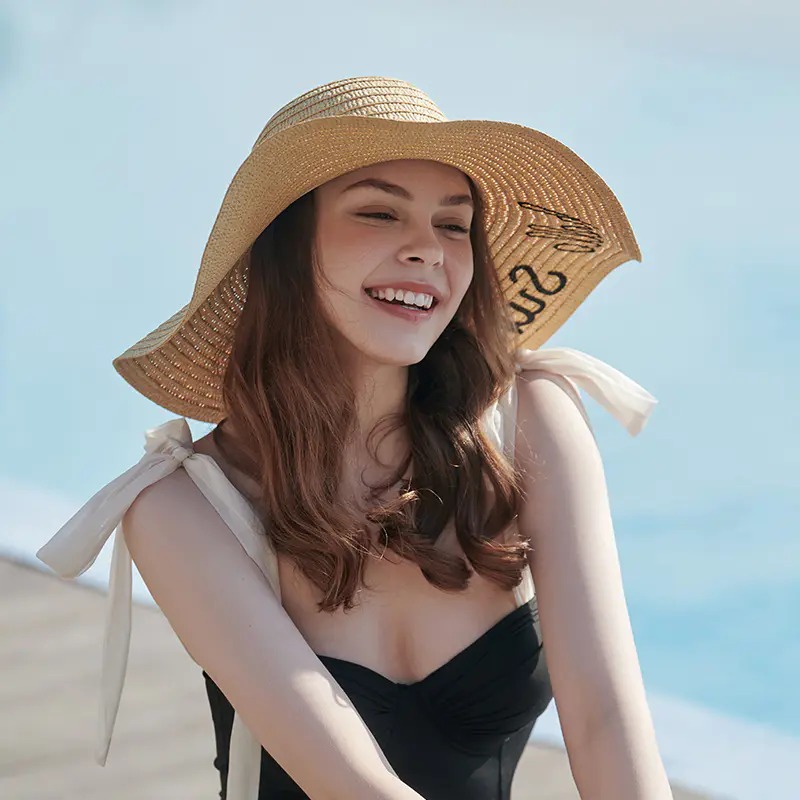
Raffia: Derived from the leaves of the Raphia farinifera palm, native to Madagascar and other tropical regions. Fibers are harvested, dried, and often dyed. Used for crocheted, braided, and woven hats. Characteristics: soft, flexible, natural sheen. Absorbs dyes readily, allowing vibrant colors. Less rigid than other straws; hats may soften and relax with wear. Natural raffia is tan to light brown.
Buntal Straw: Sourced from the unopened leaf of the Corypha utan palm, primarily in the Philippines. Fibers are stripped, boiled, and sun-dried. Used for fine, tight weaves in formal hats. Characteristics: smooth, stiff, natural ivory color. Accepts dye well. More rigid than toquilla, allowing structured shapes. Buntal hats are lightweight but hold their shape under humidity better than other straws.
Shantung Straw: Not a natural straw but a paper-based material. Made from paper yarns (cellulose) twisted and sometimes coated. Originated as a synthetic imitation of natural shantung fabric. Characteristics: uniform color, smooth texture, resistant to cracking. Available in wide range of colors. Holds shape well in humidity. Used for structured hat styles such as fedoras and cowboy hats.
Seagrass: Sourced from saltwater marsh grasses. Fibers are coarse and uneven. Characteristics: natural, rustic appearance; stiff; heavier than other straws. Used for casual, beach-style hats. Not suitable for fine or formal styles.
Sisal: Derived from the Agave sisalana plant. Fibers are strong and coarse. Characteristics: durable, stiff, holds shape well. Often used for cowboy-style hats and hats requiring significant structure. Natural color is light beige to tan.
Techniques Used in Making Handcrafted Straw Hats for Women
Weaving. Fibers are interlaced to form the hat body. Hand weaving produces patterns such as Panama weave, herringbone, and basket weave. Weave density determines hat quality; finer weaves require more time and skill.
Braiding. Straw strands are plaited into long bands. Braiding techniques include sennit (flat braid) and round braid. Braided bands are sewn together in concentric circles to form the hat. Common for boaters and casual styles.
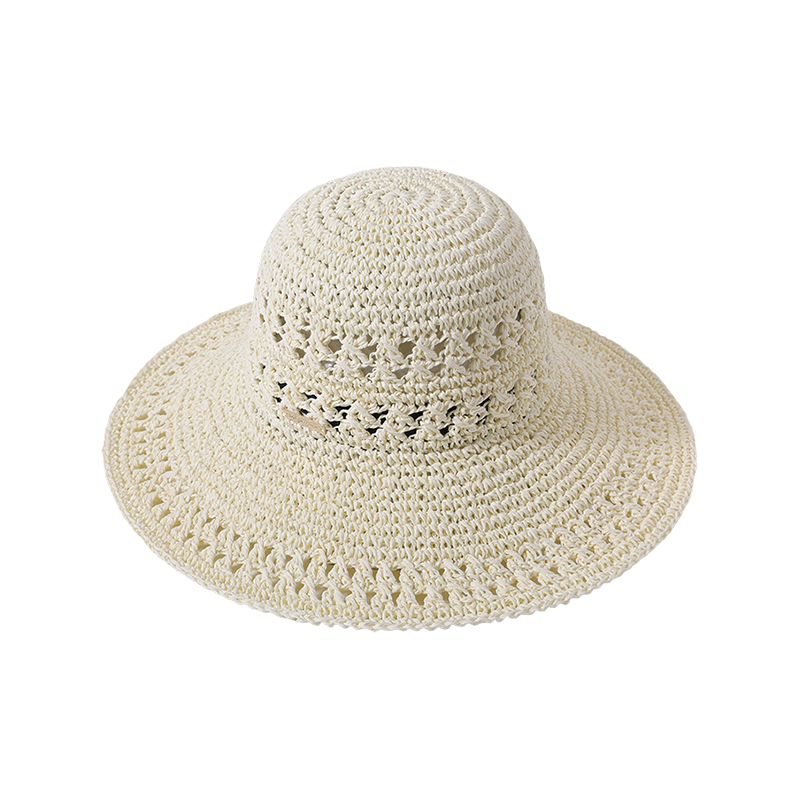
Crocheting. Raffia or paper yarn is looped with a hook to form flexible hat bodies. Stitch patterns create texture and structure. Crocheted hats are softer and more flexible than woven or braided hats.
Blocking. The hat body is stretched over a wooden or metal form (block) to shape the crown and brim. Steam or water softens the straw for shaping. After drying, the hat retains the block's shape.
Sewing and stitching. Brim edges are finished with folded binding or stitching. Crown and brim are joined with lock stitching or invisible stitching. Reinforcing stitches at stress points prevents tearing.
Edge finishing. Brim edges may be bound with ribbon, cord, or leather. Raw edges are turned under and sewn. Wire may be inserted into the brim edge to allow shape adjustment.
Sweatband attachment. Leather, fabric, or synthetic sweatbands are sewn inside the crown. Sweatbands absorb moisture and improve fit. Hand-stitched sweatbands allow future replacement.
Decoration application. Ribbons, flowers, feathers, or other trims are attached by hand stitching or adhesive. Decorative elements are positioned to complement the hat's shape.
Steam finishing. Final steam application sets the shape and removes wrinkles. The hat is allowed to cool on the block or stand to retain form.
Labeling and branding. Fabric or leather labels are hand-sewn inside the crown. Branding indicates the maker and sometimes the fiber content and country of origin.

Contact Us
-
Add:
Linchuan Industrial Zone, Songmen Town, Wenling City, Taizhou City, Zhejiang Province, China -
Phone:
+86-13906563499 -
Wechat:
+86-13906563499 -
Email:
Lois@zjkjcrafts.com
Send Us
an Inquiry
Copyright © Zhejiang Kaijia Craft Co., Ltd. All Rights Reserved.

OEM Handmade Crafts Manufacturer