

 En
En  Español
 中文简体
中文简体
Submit feedback
Industry News
 Home / News / Industry News / How Are High-Quality Raffia Straw Hats Made and What Challenges Do They Face?
 How Are High-Quality Raffia Straw Hats Made and What Challenges Do They Face?
 2026.03.20
 Industry News
Raffia straw hats are popular for their natural look, lightweight construction, and comfort in warm-weather settings. Made from the fibers of the Raffia palm, these hats are commonly used in fashion, resort wear, and cultural attire. High-quality raffia straw hats are valued for their fine weaving, durability, and aesthetic appeal. Their production involves several careful steps, from fiber preparation to final finishing. However, despite their benefits, raffia straw hats also face specific challenges that can affect their performance and market longevity.
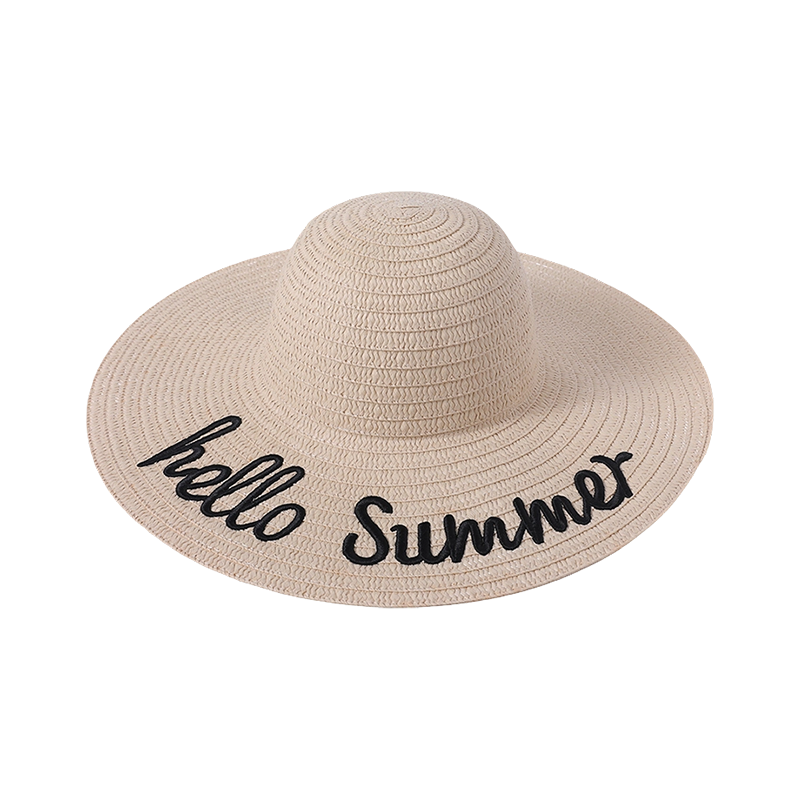
What Are the Processes Involved in the Formation of High-Quality Raffia Straw Hats?
The production of high-quality raffia straw hats involves multiple stages, each of which contributes to the hat's durability, shape, and overall finish.
1. Fiber Harvesting and Preparation
Harvesting: Raffia fibers are collected from the leaves of the Raffia palm. Mature leaves are selected for their length and strength.
Splitting and drying: Leaves are split into fine strands and dried under controlled conditions to reduce moisture content and prevent mold or degradation.
Sorting: Fibers are sorted by thickness and length to ensure uniformity for weaving.
Softening: Natural fibers are sometimes treated with steam or gentle soaking to improve flexibility for hand weaving.
This preparation stage ensures that the raw material is suitable for creating tightly woven, smooth surfaces.
2. Weaving and Hat Shaping
Braiding: Fibers are braided or twisted into long strips, which serve as the primary material for the hat.
Weaving: Strips are handwoven or machine-woven in circular patterns, starting from the crown and extending outward to form the brim.
Blocking and molding: The woven hat is placed on a wooden or metal block to shape the crown and brim. Steam or heat may be applied to hold the desired form.
3. Finishing and Decoration
Trimming: Loose fibers and irregular edges are trimmed to ensure clean lines.
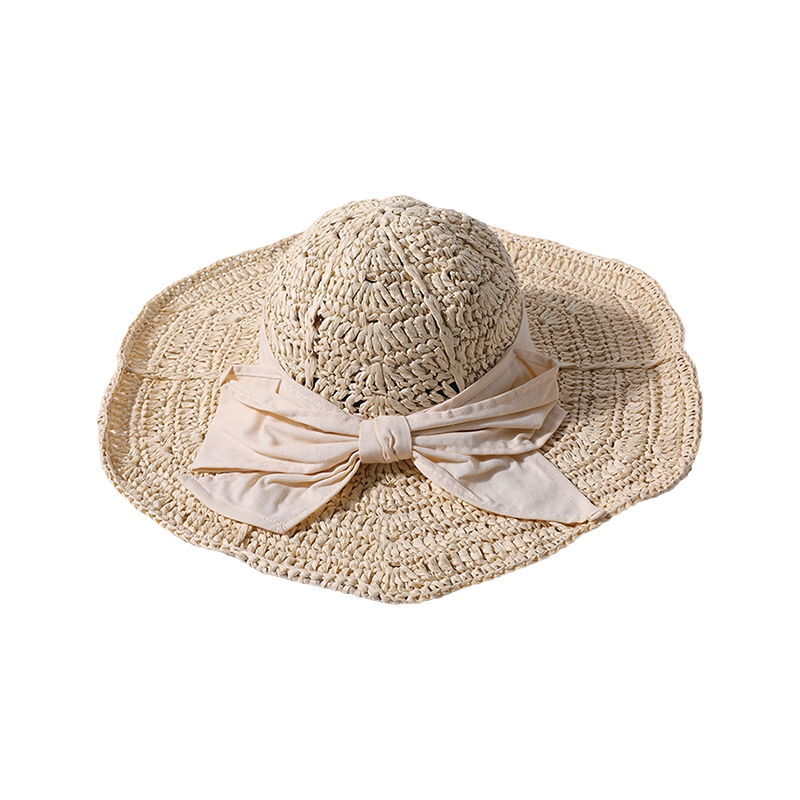
Attachment of bands or ribbons: Decorative elements such as fabric bands, bows, or other trims are added.
Coating or stiffening: Some hats receive light coatings of starch or other natural agents to enhance shape retention and surface smoothness.
These steps collectively define the appearance, structure, and quality of the final product.
What Are the Problems with Raffia Straw Hats?
Despite their appeal, raffia straw hats face several challenges related to material properties, wear conditions, and market considerations.
1. Sensitivity to Moisture and Weather
Raffia fibers are natural and absorb moisture, making hats vulnerable to deformation in rain or high humidity.
Prolonged exposure to sunlight can dry out fibers, causing brittleness and potential cracking.
Wet conditions can promote mold growth or discoloration if the hat is not properly dried.
2. Durability and Wear Issues
Handwoven structures can loosen over time, particularly at high-stress points such as the brim edge.
Fibers may fray or break with repeated handling or bending.
Hats may lose their original shape if stored improperly or subjected to pressure.
3. Maintenance and Cleaning Limitations
Raffia straw cannot be machine washed and requires gentle hand cleaning, limiting ease of care.
Stains from oils, sweat, or liquids can be difficult to remove without damaging the fibers.
Improper cleaning methods, such as excessive soaking or harsh detergents, can weaken the fibers.
4. Production and Cost Constraints
High-quality raffia straw hats are labor-intensive, requiring skilled hand weaving.
Variability in natural fiber quality can affect consistency, resulting in uneven surface textures.
These factors contribute to higher production costs, which can affect pricing and accessibility in the market.
High-quality raffia straw hats are created through careful preparation of natural fibers, hand or machine weaving, shaping, and finishing processes. Each step is important to achieve a balance of flexibility, durability, and aesthetic appeal. However, these hats also face practical challenges, including sensitivity to moisture, fiber wear, maintenance limitations, and production variability. Understanding both the production process and these limitations allows manufacturers, retailers, and consumers to make informed decisions regarding the selection, use, and care of raffia straw hats.

Contact Us
-
Add:
Linchuan Industrial Zone, Songmen Town, Wenling City, Taizhou City, Zhejiang Province, China -
Phone:
+86-13906563499 -
Wechat:
+86-13906563499 -
Email:
Lois@zjkjcrafts.com
Send Us
an Inquiry
Copyright © Zhejiang Kaijia Craft Co., Ltd. All Rights Reserved.

OEM Handmade Crafts Manufacturer