

 En
En  Español
 中文简体
中文简体
Submit feedback
Industry News

Choose Wide Brim Flat Top Straw Hats
 2026.05.27
 Industry News
Types of Straw and Brim Dimensions
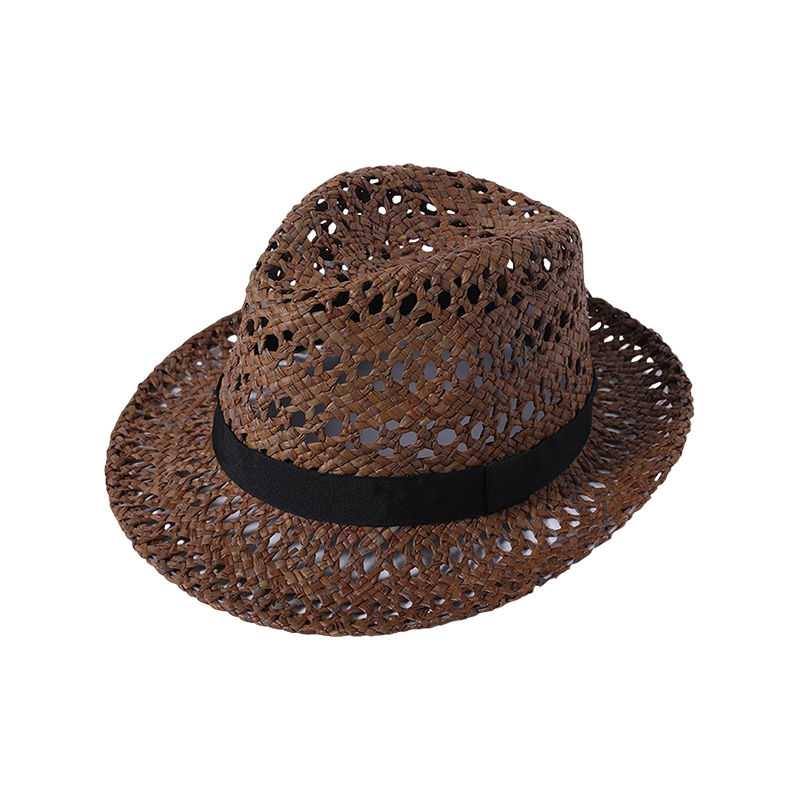
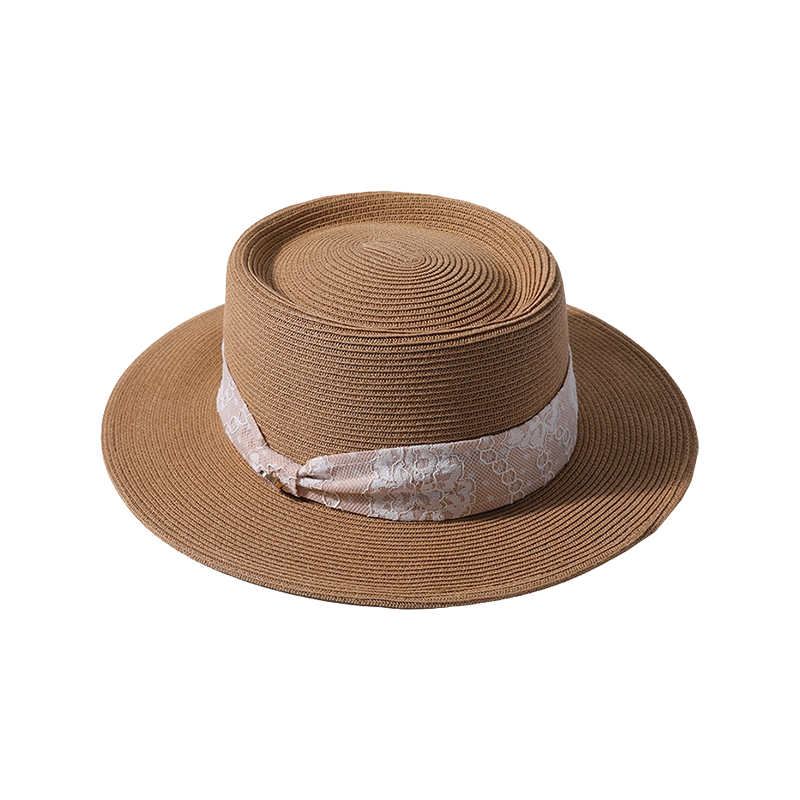
Wide brim flat top straw hats, often called "boater hats" or "flat caps" in straw, are defined by their horizontal brim (typically 8 to 12 cm wide) and a completely flat crown (top) that is perpendicular to the brim. The wide brim provides shade for the face, ears, and neck. For a typical adult head circumference of 55 to 60 cm, a hat with a 10 cm brim reduces direct sunlight exposure to the face by approximately 80 percent when the sun is at an elevation of 40 to 60 degrees (mid-morning to mid-afternoon). The brim does not shade the face as effectively when the sun is lower (below 30 degrees elevation, such as early morning or late afternoon); at those angles, a longer brim of 12 to 15 cm is required. The crown is flat and stiff, usually 7 to 10 cm tall, with a tapered or boxy shape.
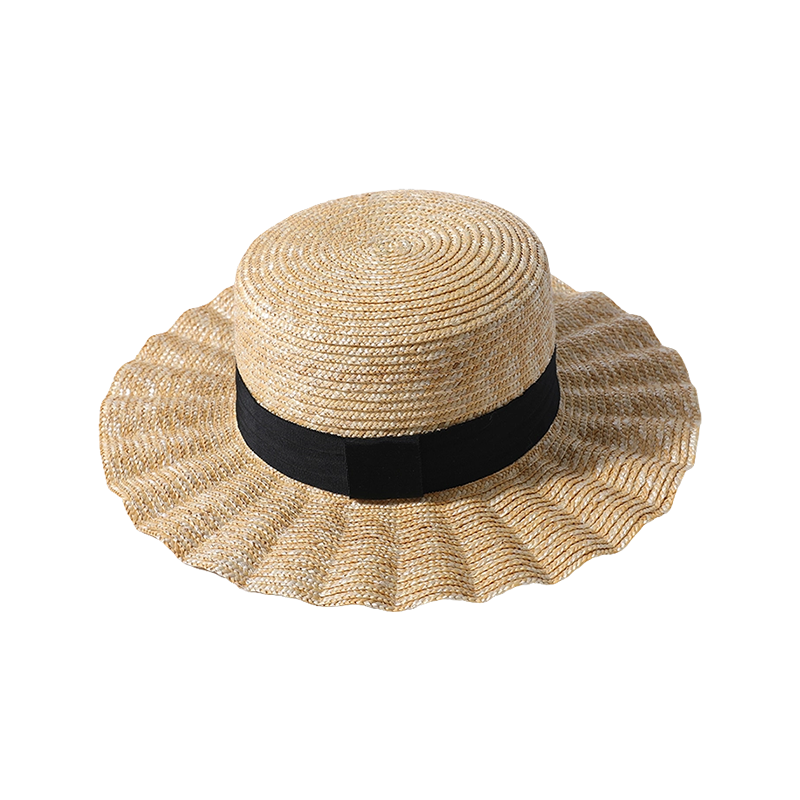
Materials: Natural Straw Versus Synthetic
The most common material for these hats is natural straw, specifically toquilla straw (from Ecuador), raffia (from palm leaves), or seagrass (from salt marsh plants). Toquilla straw is fine (fibers 0.5 to 1.0 mm diameter) and flexible; it is used for hats with a dense weave of 15 to 20 weaves per cm². Raffia is coarser (fibers 1.5 to 2.5 mm) and stiffer; it is used for hats with an open weave (5 to 10 weaves per cm²). Seagrass is the thickest (fibers 2 to 4 mm) and is typically glued or stitched into a flat sheet, then cut into hat shapes. Natural straw hats are lightweight (80 to 150 grams) and breathable because the gaps between fibers allow airflow. However, natural straw absorbs moisture; a 100 g hat can absorb up to 20 g of water in humid conditions (80 percent relative humidity), becoming heavier and slightly less stiff. Synthetic straw hats are made from polypropylene (PP) or high-density polyethylene (HDPE) fibers that are extruded, then woven similarly to natural straw. Synthetic hats weigh 120 to 200 grams, are waterproof, and do not absorb moisture. They also maintain their shape better in humidity because the fibers do not swell. The tradeoff is less breathability: synthetic hats have lower air permeability (10-20 percent less than natural straw measured at 10 Pa pressure difference).
Sizing and Fit Adjustment
A wide brim flat top straw hat should fit snugly enough to stay on in a 20 km/h wind (typical walking speed) but not so tight that it leaves a red mark on the forehead after 30 minutes of wear. The hat size is measured as the circumference of the head above the ears. Sizes range from 54 cm (extra small) to 62 cm (extra large) in 1 cm increments. Most mass-produced hats are available in small (54-56 cm), medium (57-59 cm), and large (60-62 cm). Non-adjustable hats rely on an inner sweatband made of cotton or leatherette, which compresses by 0.5 to 1.0 cm over the first 10-20 wears, customising the fit. Adjustable hats have a drawstring or elastic band inside the crown, allowing the circumference to change by 2 to 3 cm. A drawstring that is pulled too tight causes the crown to pucker under the sweatband, creating visible wrinkles on the flat top. The proper adjustment leaves the drawstring loose enough that the hat can be rotated on the head with light finger pressure (1-2 N force).
Sun Protection and UPF Ratings
The ultraviolet protection factor (UPF) of a straw hat depends on the weave density. A tight weave of 15 to 20 toquilla strands per cm² blocks 95 to 98 percent of UVA and UVB rays (UPF 20-50). An open weave of 5 to 8 strands per cm² blocks only 60 to 70 percent (UPF 3-5). The UPF rating is tested per AATCC 183 or AS/NZS 4399 standards. For use in high-sun conditions (beach, desert, high altitude above 2,000 meters), a UPF of 30 or higher is recommended. The brim width also affects UV exposure to the nose and lips: a 10 cm brim reduces UV dose to the nose by 70 percent compared to no hat, but the chin and neck receive only 30-40 percent reduction because light reflects off surfaces. A brim of 12 cm or more is needed to shade the chin when the sun is at 45 degrees elevation. The hat's interior (underside of the brim) should be dark-coloured (brown, black, or dark green) to reduce UV reflection onto the face. A light-coloured underside reflects 30-50 percent of upwelling UV (from sand, water, or concrete), whereas a dark underside reflects only 5-10 percent. Some straw hats have a fabric lining sewn into the underside to improve UPF and reduce reflection.
Climate-Specific Variations (Tropical vs. Arid Regions)
For tropical regions (Southeast Asia, Central America, the Caribbean), wide-brim flat-top straw hats are often made from toquilla or raffia with a looser weave (8-12 strands per cm²) to maximise airflow. The open weave allows sweat to evaporate from the scalp at a rate of 30-50 grams per hour in 80-90 percent relative humidity. The hat typically has a wider brim (11-13 cm) to provide additional rain protection (light tropical showers of 5-10 mm per hour). The crown is reinforced with a cotton or polyester liner inside the top to prevent the straw from collapsing under the weight of rain. In these regions, hats are often sold with a chinstrap made of cotton cord or leather, which keeps the hat on during sudden gusts of wind (common during tropical storms). The chinstrap attaches at two points — either under the brim at the sides, or through two small holes drilled in the crown. A chinstrap installed through holes in the crown is more secure but creates potential leak points; the holes are usually grommeted with brass or stainless steel eyelets (3-5 mm diameter) to prevent tearing.
For arid and desert regions (Middle East, North Africa, Australian outback), the wide brim flat top straw hat is typically made from seagrass or a denser toquilla weave (18-22 strands per cm²). The tight weave reduces water loss from the hat (natural straw loses moisture to dry air, becoming brittle); a tight-weave hat in 20 percent relative humidity loses only 5-10 grams of water per day versus 20-30 grams for an open-weave hat. The brim is often slightly curved downward at the edges (called a "droop" of 15-20 degrees) to block more reflected sunlight from the ground. The crown is often lined with a reflective material (aluminised mylar or white cotton) to reduce heat absorption; a white-lined crown stays 5-8°C cooler under direct sunlight than an unlined crown, measured with an internal thermocouple. Hats for use in desert environments typically have a UPF rating of 50+ (blocking 98 percent or more of UV), which is achieved by using two layers of straw or adding a thin cotton liner between two straw layers. This double-layer construction adds 30-50 grams to the weight of the hat.

Contact Us
-
Add:
Linchuan Industrial Zone, Songmen Town, Wenling City, Taizhou City, Zhejiang Province, China -
Phone:
+86-13906563499 -
Wechat:
+86-13906563499 -
Email:
Lois@zjkjcrafts.com
Send Us
an Inquiry
Copyright © Zhejiang Kaijia Craft Co., Ltd. All Rights Reserved.

OEM Handmade Crafts Manufacturer