

 En
En  Español
 中文简体
中文简体
Submit feedback
Industry News

Sustainable Straw Hats: Types and Care
 2026.05.22
 Industry News
Types of Sustainable Straw Hats on the Market
Sustainable straw hats are made from renewable plant fibers that are harvested without killing the plant (or with minimal environmental impact), processed with low chemical use, and are biodegradable at the end of life. Sustainable options emphasize organic farming, hand-weaving traditions, and compostable finishes. The following types are distinguished by plant source, growing region, and production method.
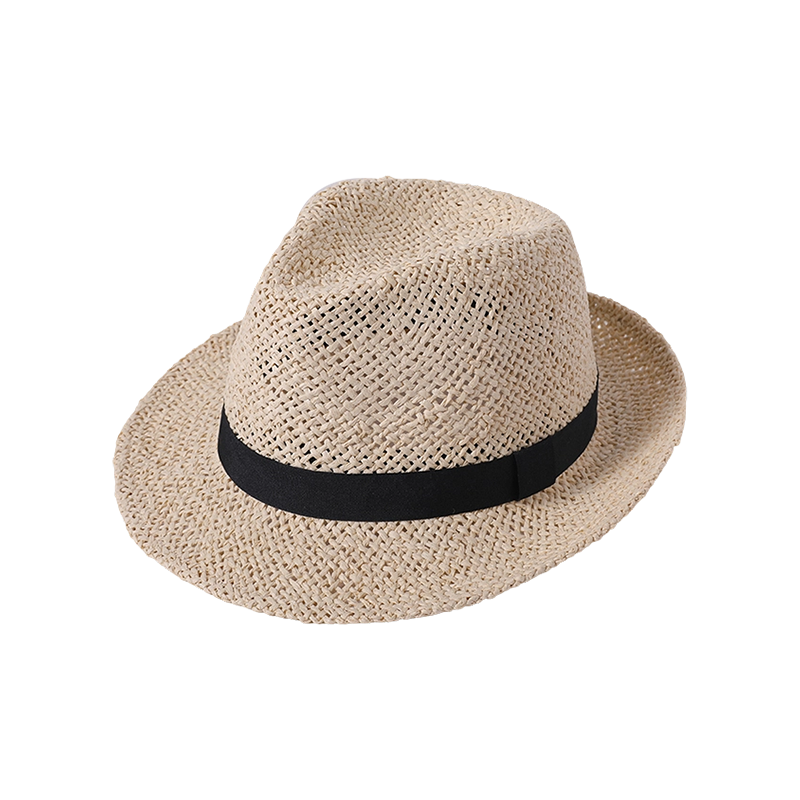
Toquilla palm straw (Panama hat, Ecuador). Harvested from young toquilla palm leaves (Carludovica palmata). The fibers are hand-cut, boiled, sun-dried, and hand-woven. No synthetic binders. The hat is finished by washing, bleaching with sunlight (not chlorine), and pressing. Toquilla palm is a renewable crop—the same plant produces leaves for 10–15 years. These hats are lightweight (80–150 grams), flexible (can be rolled for travel), and last 10–30 years with care. They are the gold standard for sustainable straw hats. Many carry Fair Trade certifications (e.g., WFTO). The majority (85–90%) are made in Ecuador and Peru.
Seagrass straw (Vietnam, China, Indonesia). Made from the stems of seagrass plants (Lepironia articulata or Cyperus species) grown in flooded paddies. The stems are harvested, dried, split, and hand-twisted into cords, then sewn into hat shapes. Seagrass is very durable and water-resistant because the stems contain natural silica. However, the texture is rough and coarse. Seagrass hats are heavy (250–400 grams) and stiff. They are not flexible. They are often used for gardening hats, sun hats for beach workers, and rustic fashion. The plants regenerate within 6–12 months, and the production process uses little water beyond the natural paddies. No dyeing or bleaching is typical; the natural green-brown color is the final color. Seagrass hats last 3–5 years. They can be composted at the end of life.
Buntal straw (Philippines). Made from the fibers of the buri palm (Corypha utan). Specifically, buntal refers to the unopened leaf sheaths (the material that wraps around the central growing tip). The fibers are fine, white, and silky. Hats are hand-woven in a crochet-like technique, producing an open, airy weave (80–90% open space). Buntal hats are very lightweight (50–100 grams) and breathable but offer limited sun protection because of the open weave. They are formal hats (weddings, garden parties) rather than work hats. The buri palm takes 30–40 years to reach maturity, but the leaf sheaths are harvested without killing the tree (each harvest takes 2–3 years to regrow). Buntal is considered sustainable because it uses a byproduct of buri palm sugar production.
Organic cotton crocheted hats (not straw, but often grouped with straw for sustainable summer hats). While not plant stalk fiber, these are included because they serve the same function. Organic cotton yarn is crocheted into a loose, open weave. They are soft, washable, and have no chemical residue. However, they offer limited shade (open weave) and no stiffness. They last 2–3 years with gentle washing. The sustainability depends on organic farming (no pesticides, less water than conventional cotton). GOTS (Global Organic Textile Standard) certification indicates genuine organic cotton.
Sustainable Straw Hat Material Information
Fiber Harvesting and Processing Methods. For toquilla palm, sustainability begins with selective harvest: only the outer, young leaves are cut from the palm, leaving the inner, growing core intact. A skilled harvester cuts 30–50 leaves per day. The leaves are then split by hand into 0.5–2 mm wide strips using a metal gauge. Boiling (in water only, no chemicals) for 20–40 minutes removes chlorophyll and softens lignin, turning the white fibers a pale ivory color. Sun-bleaching (2–4 days) replaces chlorine whitening. For seagrass, the stems are harvested by cutting above the waterline, leaving the roots to regrow (3–4 months). The stems are dried in the sun for 2–3 weeks, then split lengthwise. No water or chemicals beyond natural rain. For buntal, the leaf sheath is stripped from the growing palm bud by hand. The sheath is soaked in rainwater (1–2 days), then scraped to remove the waxy outer layer. The inner fibers are left in their natural white state. The entire process uses no electricity or synthetic chemicals.
Biodegradability and End of Life. All natural straw hats (toquilla, seagrass, buntal, ramie) are 100% biodegradable in a home compost pile, provided no synthetic paints, plastic liners, or resin coatings are added. A toquilla hat will break down in a well-maintained compost pile (turned weekly, 50–60% moisture) within 4–8 months. The fibers turn into a brown, crumbly material. The sweatband, however, is often made of leather or synthetic fabric. A sustainable hat should have a cotton or linen sweatband (undyed) and no plastic stiffener. Check the inside of the hat. Some manufacturers use a polyester mesh as a crown support—this is not biodegradable. For paper straw hats with PLA resin, industrial composting (55–60°C) is required; home piles do not get hot enough to break PLA. For organic cotton crocheted hats, they biodegrade in 2–6 months in home compost if pure cotton with no synthetic thread.

Contact Us
-
Add:
Linchuan Industrial Zone, Songmen Town, Wenling City, Taizhou City, Zhejiang Province, China -
Phone:
+86-13906563499 -
Wechat:
+86-13906563499 -
Email:
Lois@zjkjcrafts.com
Send Us
an Inquiry
Copyright © Zhejiang Kaijia Craft Co., Ltd. All Rights Reserved.

OEM Handmade Crafts Manufacturer