

 En
En  Español
 中文简体
中文简体
Submit feedback
Industry News
 Home / News / Industry News / How do different straw materials compare in terms of durability and weather resistance?
 How do different straw materials compare in terms of durability and weather resistance?
 2026.05.15
 Industry News
Not all straw cowboy hats are the same. The material determines how long the hat lasts and how well it handles moisture, sun, and sweat.
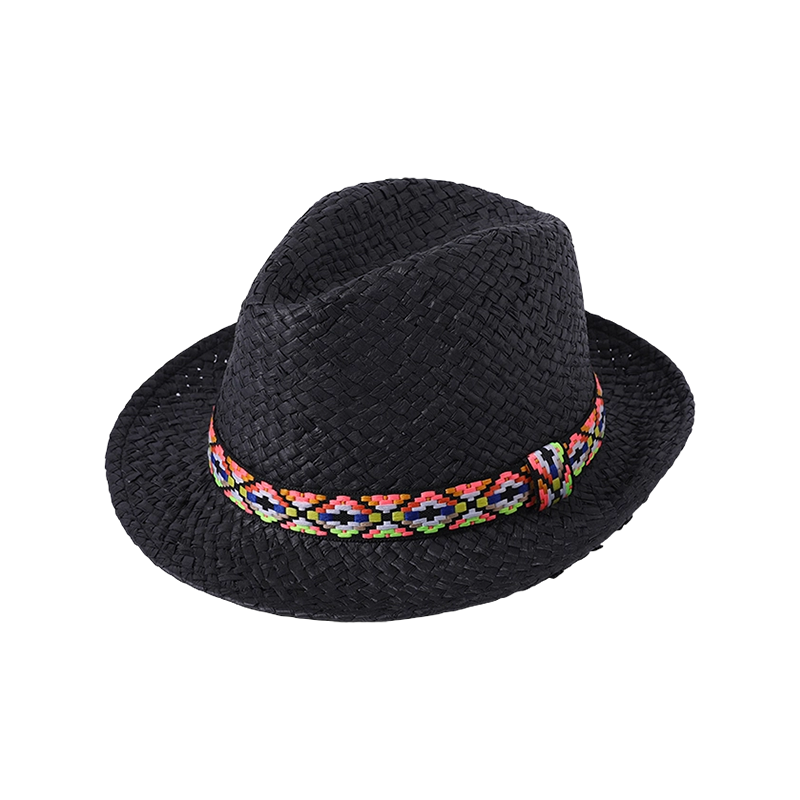
Wheat straw and rye straw (natural, uncoated). These are the most common and least expensive. The straw stalks are split, flattened, and woven. Wheat straw hats are stiff but brittle; a sharp bend (such as crushing the hat in a suitcase) will crack individual straws. They absorb moisture readily—sweat stains appear as dark rings after 20–30 hours of wear. Rain causes the brim to sag (lose its shape) unless the hat has a wire brim edge. Uncoated wheat straw typically lasts one summer season (about 3–4 months of regular outdoor use) before the brim edges fray and the crown becomes misshapen. In high humidity (above 70%), wheat straw absorbs moisture from the air, and the hat becomes limp. You can reshape it, but repeated wetting and drying cycles cause the straw fibers to split.
Toquilla palm straw (Panama hat material). Made from the leaves of the toquilla palm (Carludovica palmata), grown in Ecuador and Colombia. The fibers are hand-woven. This is the most durable natural straw for hats. Toquilla straw has natural oils that repel water better than wheat straw. A toquilla hat can be lightly rained on and will recover its shape after drying if stored properly. It also has a tighter weave (12–20 weaves per cm) than wheat straw (4–8 weaves per cm), making it more resistant to cracking. A well-made toquilla straw cowboy hat lasts 5–10 years with proper care. However, it is also more expensive. The straw remains flexible; you can roll a toquilla hat into a cylinder for travel (a technique used for Panama hats), though repeated rolling may eventually loosen the weave.
Seagrass straw (rare, specialty). Seagrass grows in saltwater estuaries. The straw is thicker and coarser than wheat straw. Hats made from seagrass are heavy (300–450 grams, compared to 150–250 grams for wheat straw). They are very durable and resist water well because seagrass contains natural silica. However, the texture is rough and can be scratchy against the forehead. Seagrass hats are usually left uncoated and natural. They are common in coastal areas (beachgan) but less common for cowboy-style hats because seagrass does not hold a shaped brim as well.
Do straw cowboy hats provide adequate protection from the sun? And how does the weave density affect this?
Yes, but the level of protection depends entirely on the tightness of the weave and the material. A hat's ultraviolet protection factor (UPF) is not usually printed on the label, but estimates based on weave structure exist.
- Wide weave (4–6 weaves per cm, visible light passes through easily): These hats (often cheap souvenir hats) have a UPF of about 5–1They block only 80–93% of UV radiation. That sounds high, but a UPF 10 means 1/10th of UV passes through. For a full day in the sun (8 hours), the top of your head receives the equivalent of 45–90 minutes of unprotected exposure. You may get a sunburn on the scalp if you have thinning hair or a bald spot. These hats are more for shade to the face and neck than for protection of the scalp.
- Medium weave (7–10 weaves per cm, small gaps visible when held to light): Most standard cowboy straw hats fall here. UPF 20–40. They block 95–97.5% of UV. For a full day, the scalp receives 15–30 minutes of equivalent unprotected exposure. This is generally adequate for most people. The brim (which is folded or layered) provides a UPF of 50+ because the double layer of straw blocks nearly all light.
- Tight weave (12–15+ weaves per cm, no visible gaps): High-quality toquilla palm hats. UPF 50+ (98%+ block). These are comparable to a tightly woven cotton fabric. They block virtually all UV. The trade-off is reduced airflow. A tight-weave hat is warmer (by 3–5°C at the scalp) than a wide weave hat because less hot air can circulate through the crown.
Brim width is as important as the crown. The brim protects your ears, neck, and face. A 7 cm brim (common on smaller "fashion" cowboy hats) shades the face only when the sun is high overhead (within 30 degrees of zenith). At 3 pm (45-degree sun angle), the shadow shifts downward, leaving the nose and chin exposed. A 10 cm brim extends protection for another 1–2 hours. A 12 cm brim is typical for work hats (ranching, construction). For UV protection of the neck, the back brim matters more than the front. Some straw hats have a back "sun flap" (a cloth extension), but these are less common.
How should a straw cowboy hat be sized and fitted correctly?
Straw hats do not stretch like felt hats, so sizing is more critical. The material does not have elastic recovery. If a straw hat is too tight, it will cause headaches and leave red marks on the forehead. If too loose, wind (even a light breeze of 15–20 km/h) will lift it off your head.
Measuring your head. Use a flexible cloth measuring tape (not a metal one). Wrap it around your head about 1 cm above your eyebrows and just above your ears—this is where the hat sits. Keep the tape level. Do not pull tight; it should be snug but not compressing skin. Record the measurement in centimeters. Then refer to a size chart: 55 cm = size 6-7/8 (US) or 6-7/8 (UK), 57 cm = 7-1/8, 59 cm = 7-3/8, 61 cm = 7-5/For straw hats, many manufacturers use small, medium, large, extra-large: Small = 54–55 cm, Medium = 56–57 cm, Large = 58–59 cm, X-Large = 60–61 cm. About 70% of adult men wear Large (58–59 cm). About 60% of adult women wear Medium (56–57 cm). If you are between sizes, choose the larger size because you can add hat sizing tape (adhesive foam strips, 2–5 mm thick) to the inside sweatband. You cannot easily make a too-tight straw hat larger.
The "two-finger test." After putting on the hat, you should be able to insert one finger (not two) between the sweatband and your forehead at the center. If you can easily insert two fingers, the hat is too loose. If you cannot insert one finger, it is too tight. The hat should not wobble when you shake your head side to side. If it wobbles, it is too loose.
Sweatband shrinkage. Leather sweatbands (standard on better straw hats) absorb moisture from sweat and shrink over time. A hat that fits perfectly new may become tight after 3–6 months of regular use (20–30 hours per week). If you notice the hat starting to feel snug, you can stretch it slightly. Use a hat stretcher (a mechanical expander, $15–30) or stuff the crown with rolled towels to apply gentle outward pressure. Leave for 24–48 hours. Stretch only 0.5–1.0 cm (half to one full size). Stretching more than that will crack the straw at the crown brim junction.

Contact Us
-
Add:
Linchuan Industrial Zone, Songmen Town, Wenling City, Taizhou City, Zhejiang Province, China -
Phone:
+86-13906563499 -
Wechat:
+86-13906563499 -
Email:
Lois@zjkjcrafts.com
Send Us
an Inquiry
Copyright © Zhejiang Kaijia Craft Co., Ltd. All Rights Reserved.

OEM Handmade Crafts Manufacturer